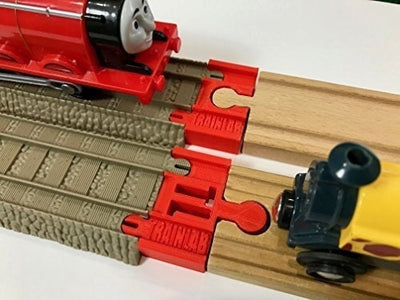
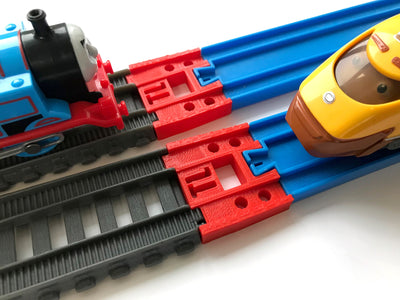
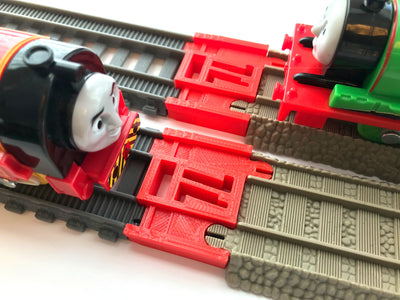
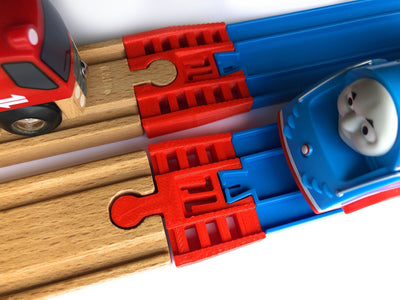
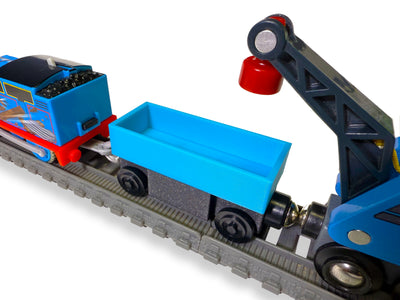
When a wooden train track does break, it is nearly always the same way: the little wooden peg on the end snaps off. The track itself is fine. The rails are fine. But without that peg it will not join to anything, so it ends up in a drawer, and the layout gets one piece smaller. The good news is that this is an easy, ten-minute fix.
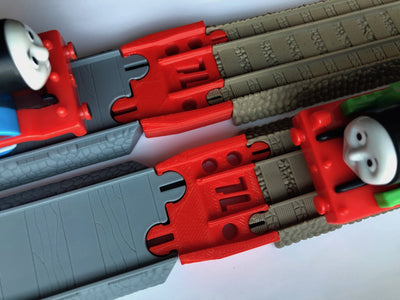
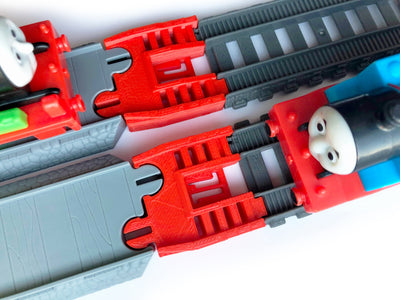
This guide covers that repair on standard wooden railway track. If your track is plastic TrackMaster or Plarail, that is a different connector with a different fix, and there is a link at the end.

Why the peg is always what breaks
Look at how a wooden track is put together. The board is a solid piece of hardwood that will happily survive years of play. The connector at each end is a short wooden peg glued into a drilled hole.
Every join and separation puts a little sideways load on that peg, and after enough happy afternoons of building and rebuilding, the peg eventually shears off at the shoulder — usually leaving part of it still glued in the hole. That is simply the nature of a small wooden peg on a well-loved toy.
So you end up with a perfectly good piece of track that cannot connect. The wood is not the consumable part. The peg is the consumable part, and for a long time there was no easy way to replace one.
What a pegbone is
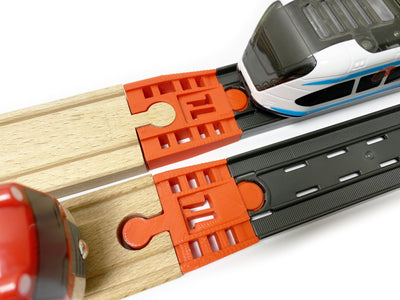
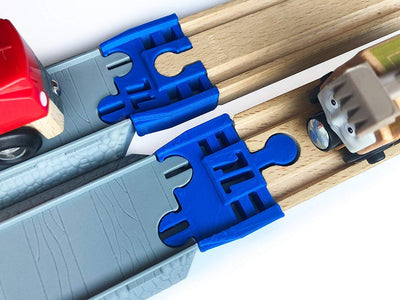
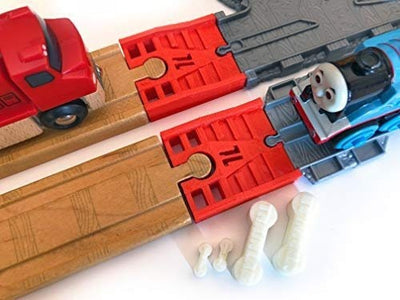
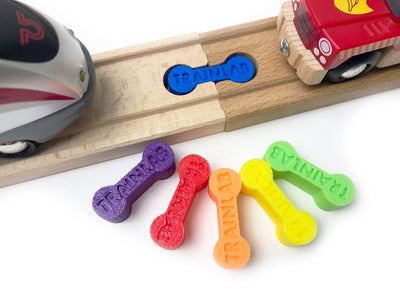
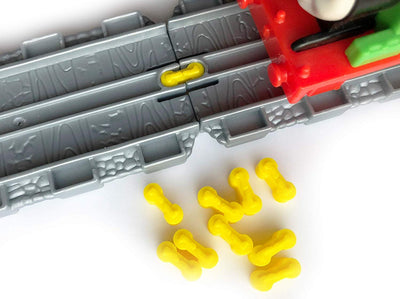
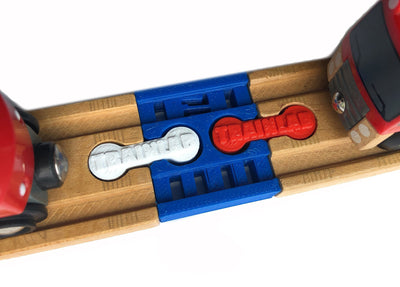
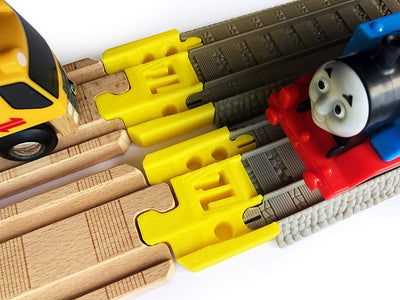
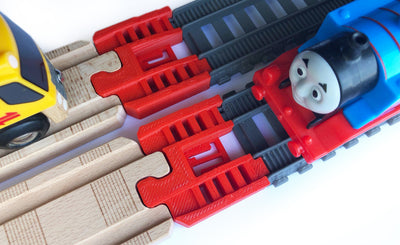
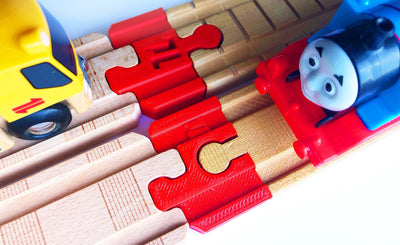
A pegbone is, quite literally, half a dog bone. One side is a ribbed shaft shaped to sit inside the hole the broken peg came out of; the other is a standard connector face, so the repaired end works like any other track end.

It is not glue, not filler, and not a whole replacement track. It is the one part that broke.

TrainLab Pegbones come five to a pack for $9.99, in a choice of colors — pick yours on the product page. Five pegbones rescue five pieces of track, which usually covers a whole collection's worth of snapped pegs with a few to spare. Shop this repair pack →
What fits
Standard wooden railway track: Thomas & Friends Wooden Railway, BRIO, IKEA, Melissa & Doug and Bigjigs, plus most other magnetic wooden train tracks that share the same profile.
If your track physically connects to BRIO today, a pegbone is made to fit it. The wooden railway connector has stayed remarkably consistent across brands and decades, which is exactly why a hand-me-down set from a generation ago still joins onto something bought last week.
The repair
Ten minutes, and the only thing you are likely to need is a drop of glue.
1. Clear the hole
The broken peg usually leaves a stub of wood and old glue behind. Work it out gently with needle-nose pliers or a small screwdriver. The hole needs to be clear to its original depth, or the pegbone will sit proud and the join will be loose.
2. Test fit before you glue
Push the pegbone in dry and see how it sits. This five-second check decides the next step, and it is worth doing every time: hole depth varies between brands. BRIO, Thomas, IKEA and Melissa & Doug all differ a little, so the same pegbone can be snug in one track and a touch loose in the next.
3. Fit it
If it slides in snugly — add a drop of super glue or white glue to the ribbed section and press it into the hole. Keep it straight; a pegbone set at an angle will hold, but the track will sit crooked at the join. Let it dry before running trains.
If it is loose — lay a small strip of paper over the hole and push the pegbone through it. The paper takes up the slack and the ribs grip it. This is the trick worth knowing: most "it will not stay in" situations are simply a hole a fraction too wide, and the paper sorts it out.
If the hole is too small — drill it out very slightly, or shave a little off the pegbone's ribs with a craft knife. Take material off in small passes and re-test as you go. You can always remove a little more; you cannot put it back.
4. Test the join
Once the glue is dry, connect the repaired end to another track and lift the pair by the repaired piece. A good fit holds. Then run a train through the join and watch the wheels at the seam — the rail heights are matched, so it should roll straight across.

Pegbone or dog bone — which one do you need?
These solve two different problems and it is worth being clear about which one you have.
| Your problem | What you need | Price |
|---|---|---|
| The peg snapped off the end of a track | Pegbones, 5pc | $9.99 |
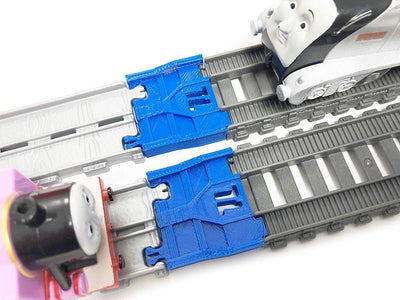
| Two track ends both have sockets and will not join | Dog Bone Connectors, 5pc | $9.99 |
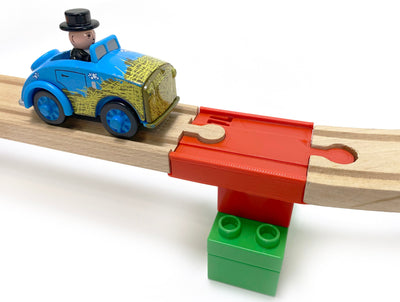
| You need a short two-ended bridge between track pieces | Female-to-Female Connector | $9.99 |
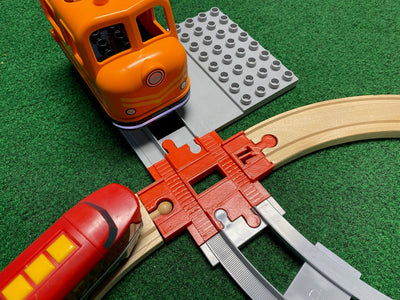
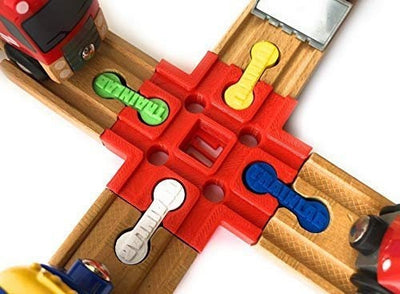
| You want a crossing where two lines meet | Cross Track Connector, 5pc | $9.99 |
Short version: a pegbone repairs a track. A dog bone joins two tracks. If you are holding a piece with a broken end, you want pegbones.
Repair or replace?
Repair it when the board is solid and only the end has failed. That is most cases. It is also the right call for any track from a discontinued set, a curve or switch you cannot buy any more, or anything with a name written on it in marker.
Replace it when the board itself has split along the grain, the rail grooves have worn through, or the wood around the hole has crumbled so badly that nothing will grip. Wood that has been through a dishwasher or left outside is usually past saving — it swells, the grain lifts, and it will not hold a fitting.
Who makes these
TrainLab has been designing and handmaking wooden railway parts in the USA since 2017 — small batch, quality-checked before they ship, non-toxic, ages 3 and up. Pegbones came about for the ordinary reason: families kept asking how to save a favorite track with a snapped peg, nobody sold the part, so we made it.
Frequently asked questions
How do you fix a wooden train track when the peg breaks off?
Clear the broken stub and old glue out of the hole, then test-fit a replacement pegbone. If it sits snugly, put a drop of super glue or white glue on the ribbed section and press it in. If it is loose, lay a strip of paper over the hole first and push the pegbone through it. If the hole is too small, drill it out slightly or shave the ribs. TrainLab Pegbones are shaped like half a dog bone, so the repaired end works like any other track end. Five come in a pack for $9.99 and fit Thomas Wooden Railway, BRIO, IKEA, Melissa & Doug and Bigjigs.
What is the difference between a pegbone and a dog bone?
A pegbone repairs a single track whose end connector has snapped off — it plugs into the track itself. A dog bone is a separate double-ended piece that joins two track ends that both have sockets. If you are holding a broken track, you want a pegbone. If you are holding two good tracks that will not join to each other, you want a dog bone. Both are $9.99 at TrainLab.
Will pegbones fit BRIO and Thomas wooden tracks?
Yes. Pegbones fit standard wooden railway track including BRIO, Thomas Wooden Railway, Melissa & Doug, IKEA LILLABO and other compatible wooden brands. The wooden railway profile has stayed consistent across brands, so if your track connects to BRIO today, a pegbone fits it. They do not fit plastic TrackMaster or Plarail track, which use a completely different connector.
When is a wooden train track not worth repairing?
When the damage is to the board rather than the end. A track that has split along the grain, worn through at the rail grooves, or been water-damaged so the wood has swollen and lifted will not hold a fitting reliably. Everything else — a snapped peg, a missing connector, a chipped end — is a repair. The connector is the consumable part; the board is the structure.
Do pegbones come in different colors?
Yes — choose your color on the product page. A darker color keeps the repair low-key if you would like it to blend in; the bright colors are popular with children, who tend to treat a repaired track as an upgrade rather than a patch.
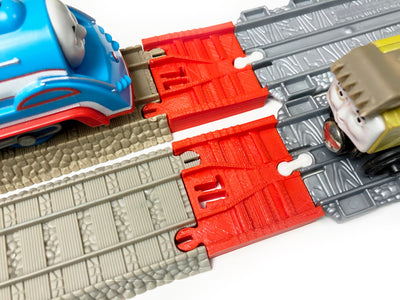
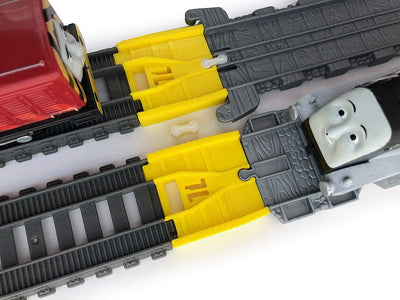
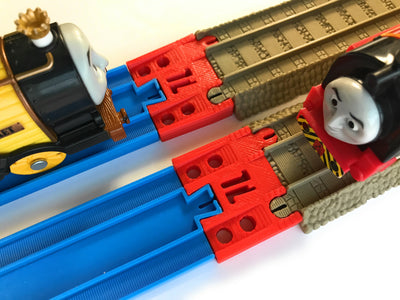
Different track system? If your broken piece is plastic rather than wooden, start with the TrackMaster adapter guide, which covers the plastic generations and what joins to what.
BRIO, Thomas, Melissa & Doug, IKEA and Bigjigs are trademarks of their respective owners. TrackMaster is a trademark of Mattel, Inc. Plarail is a trademark of Takara Tomy. TrainLab is not affiliated with any of them.