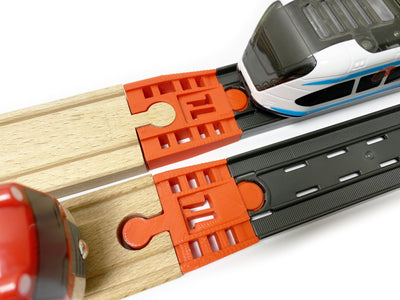
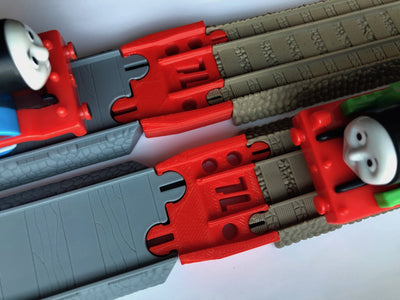
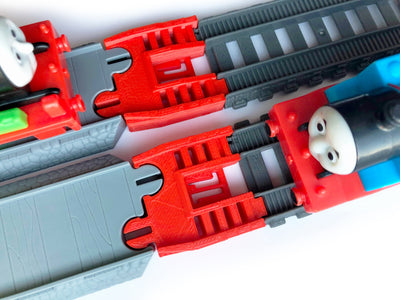
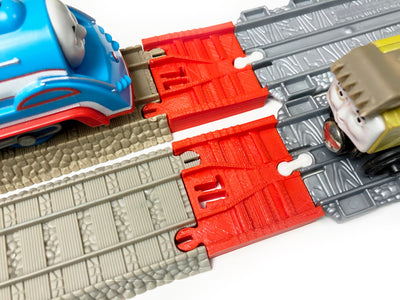
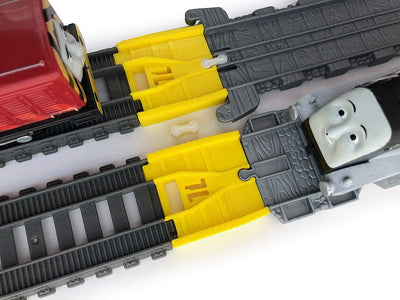
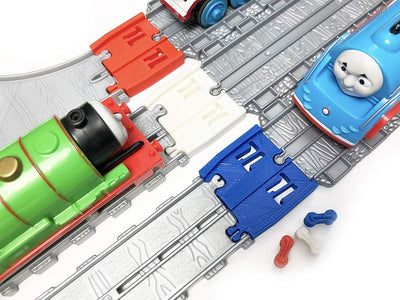
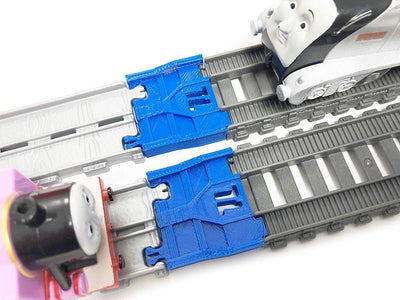
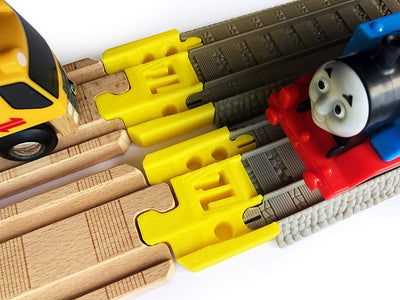
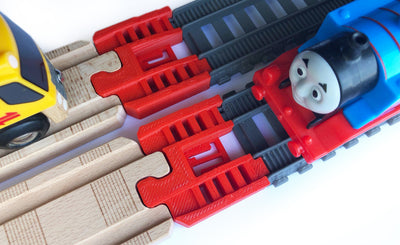
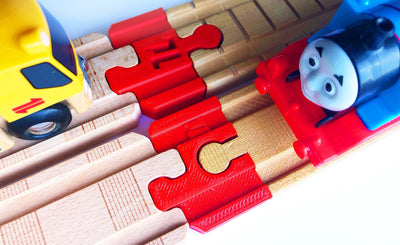
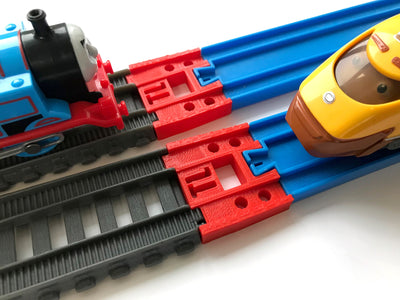
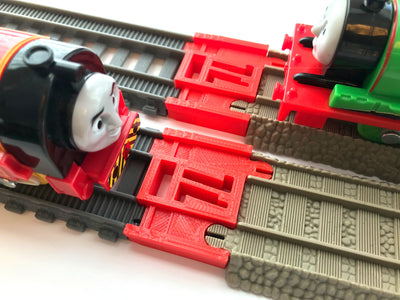
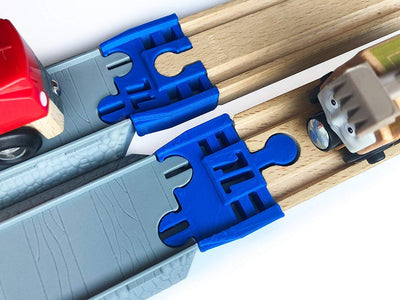
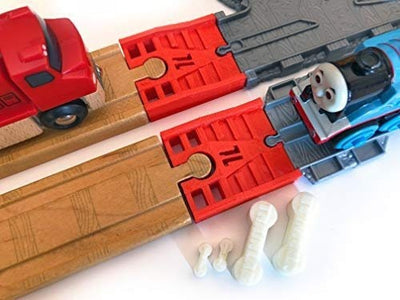
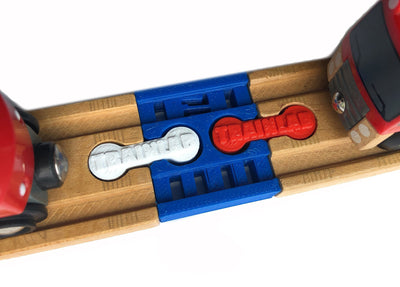
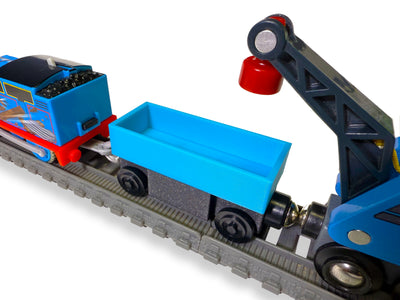
DUPLO-type building blocks and wooden railway track use completely different connections, so on their own they can only sit next to each other on the floor. With so many building and track systems in the average playroom, it can be tricky to work out how to bring them together — and the answer is a small, purpose-made bridge adapter that seats onto block studs on one face and carries a wooden-railway connector on the other.

Why Duplo and wooden railway tracks do not naturally connect
DUPLO-type blocks use a stud-and-tube connection, while wooden railway track uses peg-and-socket ends. There's nothing on a block that a wooden track end can hold onto, and nothing on a track end that will grip a stud — so a block tower and a railway stay two separate toys unless something bridges them.
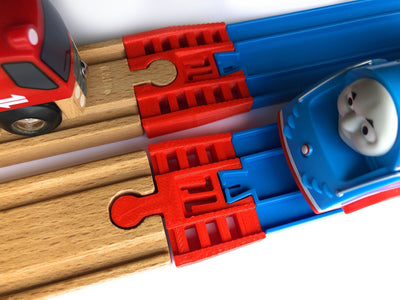
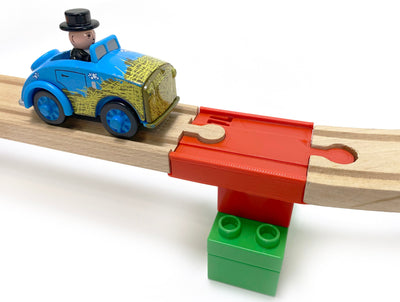
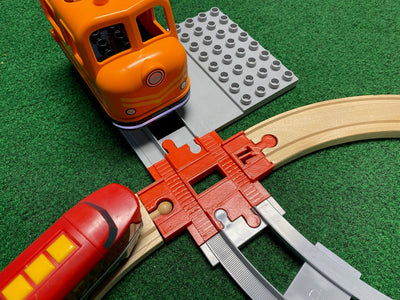
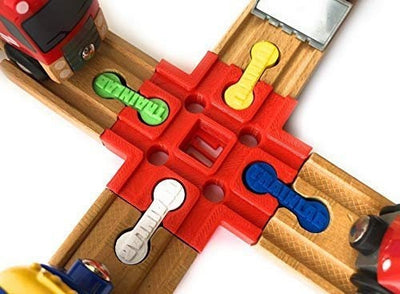
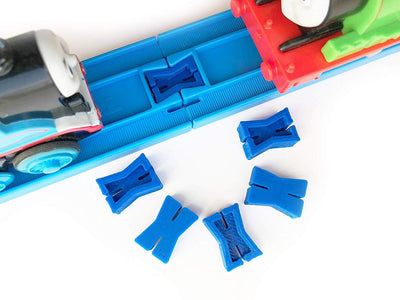
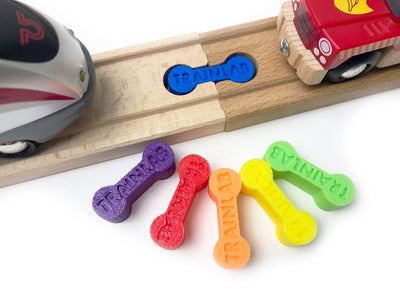
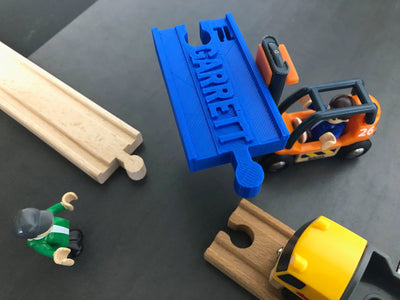
The TrainLab Bridge Adapter for DUPLO-Type Blocks to Wooden Railway does exactly that: one face seats onto block studs and the other carries a wooden-railway connector, so a block build becomes a station, bridge or tunnel on the same layout. It's $9.99, handmade in the USA by TrainLab since 2017, non-toxic and for ages 3+, and you can choose Personalized to have a child's name printed into the piece.
Choosing the right adapter
There are two TrainLab pieces for this job, and the choice comes down to the blocks you have at home. Standard wooden railway brands share the same connector, so the wooden side fits BRIO, Thomas Wooden Railway, Melissa & Doug, IKEA LILLABO and other compatible wooden brands either way.
- DUPLO-type blocks only: the Bridge Adapter ($9.99, one per pack), with an optional personalized name.
- DUPLO and standard LEGO blocks: the Connector for DUPLO and LEGO Blocks to Wooden Railway ($13.99), which fits both stud sizes.
- Stability: both hold the track at wooden-railway height, so the joined layout stays aligned during play.
If you are unsure, compare your blocks and track ends with the product photos, or contact TrainLab before ordering — we're happy to help.
How to connect Duplo-style blocks to wooden track
- Lay out the wooden track on a flat surface and decide where the block station, bridge or tunnel will go.
- Build the block section and press the adapter onto the studs where the track will meet it.
- Connect the wooden railway end to the adapter with gentle, even pressure.
- Look across the join and check that the running surfaces line up.
- Roll a train across the connection slowly to test the fit before finishing the layout.
- Rebuild as often as you like — the adapter comes off the blocks and the track by hand, no tools or glue.
If a connection doesn't want to seat, take a second look at which way the adapter is facing and which block size you're using — it usually drops in easily once the orientation is right.
Compatible wooden railway systems
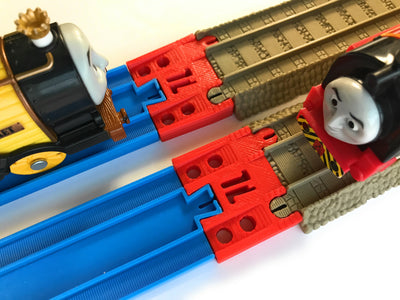
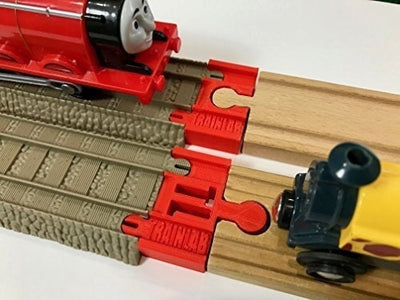
Traditional wooden railway sets share the same peg-and-socket shape, and TrainLab's DUPLO adapters carry that standard wooden-railway connector. They are made to be compatible with BRIO, Thomas Wooden Railway, Melissa & Doug, IKEA LILLABO and other compatible wooden brands named on each product page. TrainLab is not affiliated with or endorsed by those manufacturers.
For the version that fits standard LEGO bricks as well as DUPLO, see the TrainLab Connector for DUPLO and LEGO Blocks to Wooden Railway.
Building multi-level layouts
Wooden railway track is wonderful for curves, junctions, and bridges, while DUPLO-type blocks are perfect for raised stations, tunnels and supports. Start with a simple ground-level loop, then add elevation a little at a time. Keep every block support stable and roll a train through by hand before running a battery engine across it.
Care and maintenance
- Check adapters now and then and swap out any piece that is cracked or badly worn.
- Clean wooden connector sockets with a dry cloth or slightly damp cotton swab.
- Wipe plastic adapters with a damp cloth and mild soap, then dry them fully.
- Store adapters together so the right connection piece is easy to find.

Frequently asked questions
Can Duplo-style pieces connect directly to wooden train tracks?
No. The systems use different connections, so a purpose-made adapter is needed to join a block build to the track run.
Do I need a special connector?
Yes. Choose the Bridge Adapter for DUPLO-type blocks, or the DUPLO and LEGO Connector if you'd like it to fit standard LEGO bricks too. Both carry a standard wooden-railway connector on the track side.
Can I use Duplo-style blocks to support wooden railway track?
Yes — that's one of the nicest ways to use these adapters. Build the incline gradually, keep each support stable, and test each section by hand before play.
Find the right connection
Ready to combine the two systems? Shop the TrainLab Bridge Adapter for DUPLO-Type Blocks to Wooden Railway or the TrainLab Connector for DUPLO and LEGO Blocks to Wooden Railway, or contact us if you need help matching the pieces to the set you have at home.
LEGO and DUPLO are trademarks of the LEGO Group. BRIO, Thomas & Friends, Melissa & Doug and IKEA are trademarks of their respective owners. TrainLab is an independent maker and is not affiliated with or endorsed by any of them.